
Black Museums Search for Financial Independence
by Stacy M. Brown
The Washington Informer
Behind the music, dancing, and family-reunion atmosphere that filled the Philadelphia Zoo on the night of Aug. 19, another conversation was taking place among the hundreds of Black museum leaders gathered from across the country.
Money.
Who will pay to preserve Black history as government support becomes less certain? Can individual donors and foundations fill the gap? Can small museums survive the financial pressures faced by institutions with larger endowments and donor bases? And can Black museums build something more valuable than another grant: financial independence?
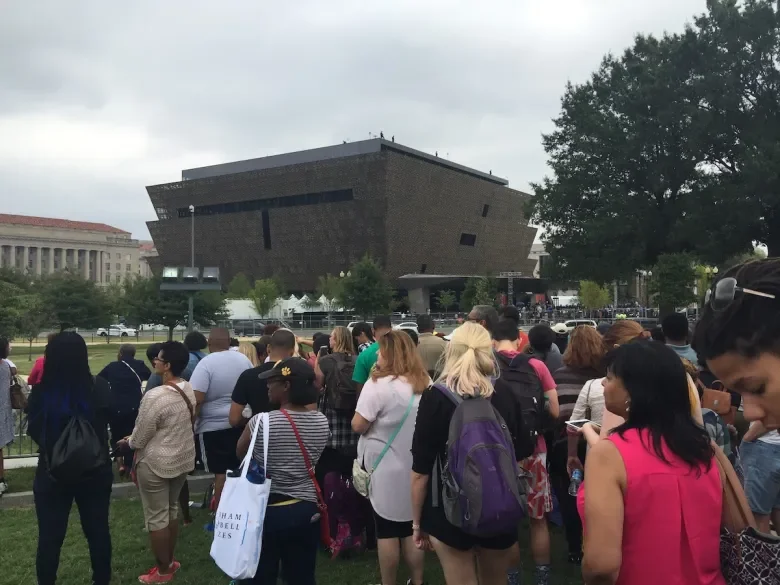
The Smithsonian National Museum of African American History and Culture. As federal support to preserve Black history continues to decrease, leaders are collaborating to fill the gap, particularly through convenings like the 48th annual conference of the Association of African American Museums. (Shevry Lassiter/The Washington Informer)
Those questions followed museum executives, historians, fundraisers and preservationists to Philadelphia for the 48th annual conference of the Association of African American Museums, which brought out 700 people through Sunday, Aug. 23.
For some institutions, the answer increasingly begins outside Washington.
“We have not gotten a dime from federal funding,” said Jarred Howard, CEO of the National Juneteenth Museum in Fort Worth, Texas.
Yet the planned museum has raised $55 million toward a $70 million capital campaign, leaving $15 million to go.
“America is supportive of what we’re doing,” Howard said. “We’re really excited about that fact.”
Howard’s numbers offer just one example of how a major Black cultural institution is assembling the money it needs without depending on Washington.
The Texas Legislature has provided $11 million for the project, he said, and museum officials are already discussing additional state support.
Howard said the institution would welcome federal funding but does not expect any in the current political climate.
“We would certainly love to have a contribution from the federal government,” Howard said. “But the state of things right now is such that we probably wouldn’t get it if we pursued it.”
So, the museum is concentrating its energy where officials believe it can produce results.